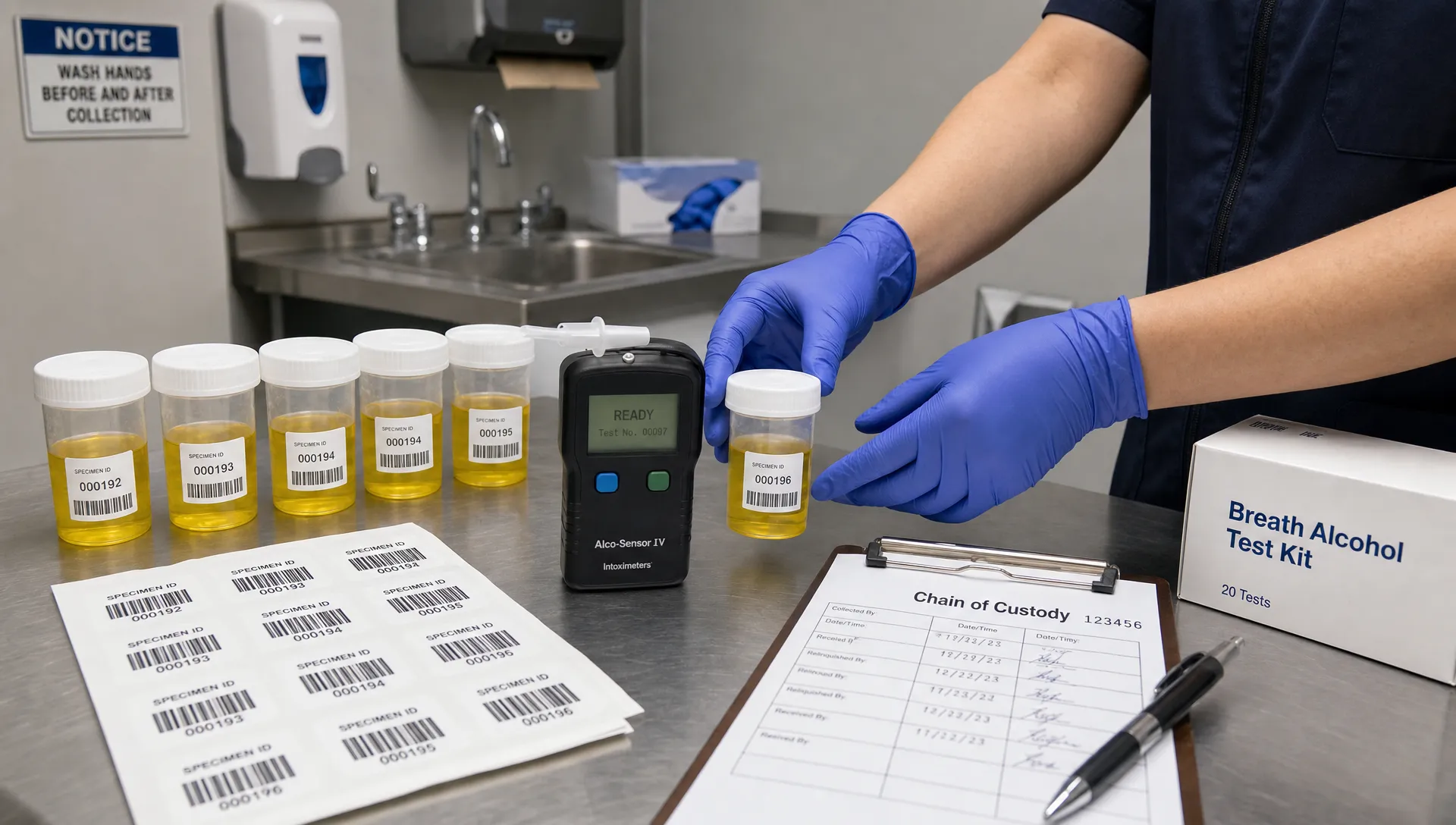

Choosing a certified drug and alcohol counselor can feel like a simple scheduling decision until a court deadline, probation requirement, DOT return-to-duty process or license reinstatement depends on it. The right professional can help you understand the requirement, complete a meaningful assessment or counseling plan and provide documentation that meets the receiving agency's expectations.
The wrong fit can cost time, money and credibility. A counselor may be compassionate and experienced, but still not qualified for the specific report, evaluation or compliance process you need. Use the criteria below to choose with confidence and avoid the most common mistakes.
Start with the outcome you need
Before you compare credentials, define what the counselor must help you accomplish. Substance use counseling, a drug and alcohol evaluation, DUI education, probation reporting and DOT SAP services can overlap, but they are not the same service.
If you want voluntary support, you may be looking for weekly counseling, relapse prevention, family support or help deciding whether treatment is appropriate. If a judge, probation officer, employer, licensing agency or DMV has given you a deadline, you are looking for compliance as well as support. That means the counselor's qualifications, report format, availability and understanding of your requirement matter from the first appointment.
Ask yourself what proof you will need at the end. You may need a written evaluation, attendance verification, a treatment recommendation, a completion letter or a report sent directly to a third party. A qualified provider should ask for your court order, probation instructions, employer letter, DOT violation information or license reinstatement paperwork before making promises.
What a certified drug and alcohol counselor should be able to prove
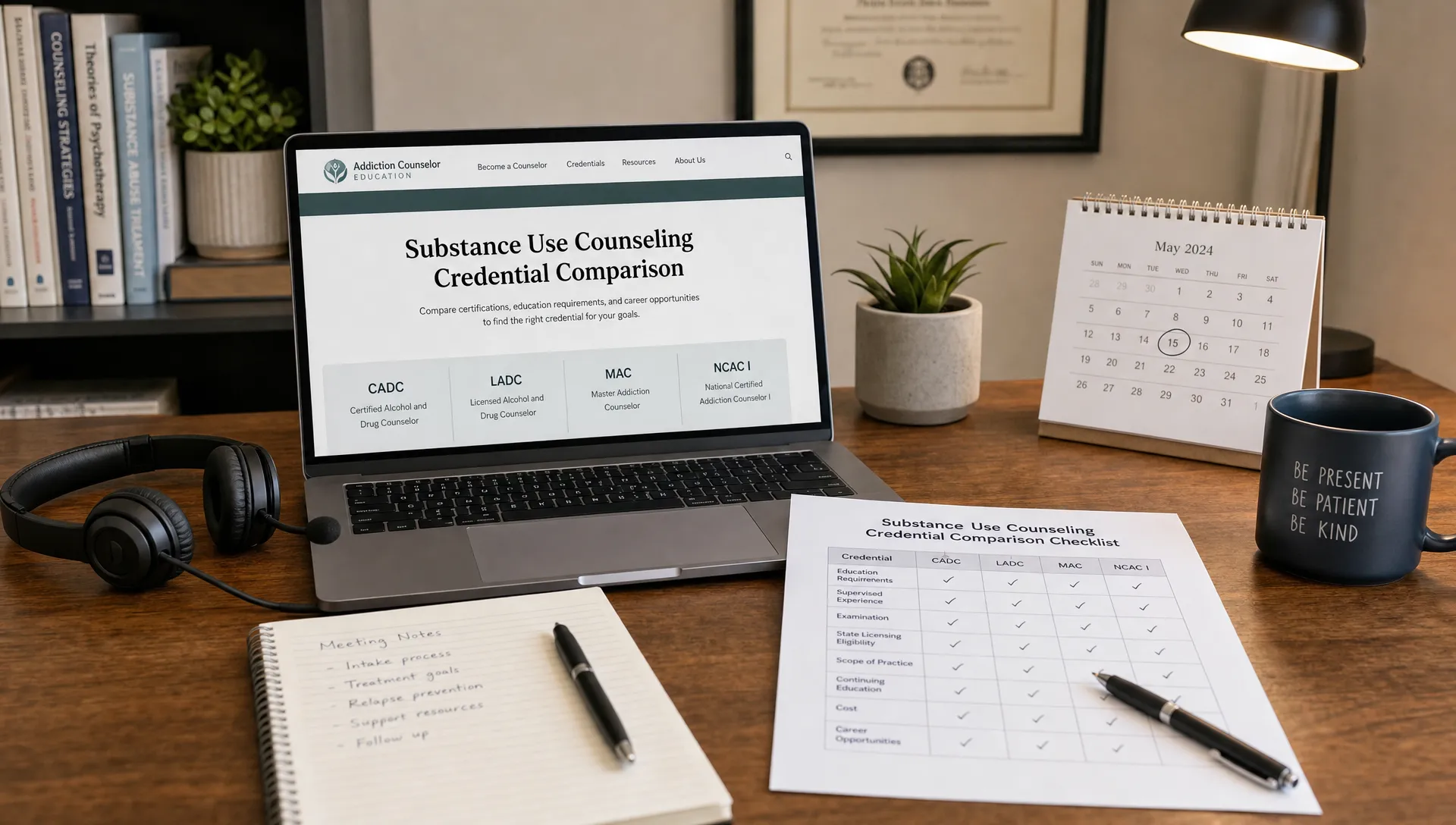
Certification means a credentialing body has reviewed the counselor's education, supervised experience, ethics training and substance use counseling knowledge. Licensure is different. A license is issued by a state and gives the professional legal authority to practice within that state's scope of practice.
In real life, titles vary by state. You may see CADC, LADAC, LADC, LCDC, CASAC, SUDP, SUDCC or similar abbreviations. The exact letters matter less than whether the credential is active, recognized where the service is being provided and appropriate for your situation.
National organizations can also play a role. For example, NAADAC's National Certification Commission for Addiction Professionals offers addiction counseling credentials, and IC&RC member boards support credentialing and reciprocity through state and international boards. These resources are useful, but they do not replace checking your state's licensing board or the agency requiring your evaluation.
A certified drug and alcohol counselor should be willing to tell you:
- Their full professional name and credential letters
- The state where they are licensed or certified
- Their license or certification number
- Whether the credential is active and in good standing
- Whether they can provide the specific report or counseling verification you need
If a provider avoids these questions, treats them as unnecessary or pressures you to schedule before verifying the basics, keep looking.
Verify credentials before you schedule
Credential verification should take a few minutes, not several days. Most state licensing boards and certification boards offer online lookup tools. If a lookup tool is not available, the provider should explain how you can confirm the credential.
| What to verify | Why it matters | How to check |
|---|---|---|
| Active license or certification | Confirms the provider is currently authorized or credentialed | State licensing board, certification board or provider documentation |
| Scope of practice | Shows whether the counselor can perform assessments, counseling or both | Ask what services the credential allows in your state |
| Disciplinary history | Helps you avoid providers with serious ethics or practice issues | State board or credentialing board public records |
| Telehealth authority | Confirms the provider can legally serve you online | Ask which state rules apply to your appointment |
| Compliance experience | Helps ensure reports match court, DOT, probation or DMV expectations | Ask for examples of report types they commonly complete |
Do not assume that a large website, polished profile or fast appointment time proves qualification. For compliance cases, documentation must be credible, current and accepted by the receiving authority.
Match the counselor to your requirement
The best counselor for one situation may be the wrong counselor for another. A voluntary counseling client may prioritize therapeutic fit and scheduling. A commercial driver with a DOT violation needs a Substance Abuse Professional who meets federal requirements. A person with a court order may need a provider familiar with local report expectations and deadlines.
| Your situation | Best-fit professional | What to confirm before paying |
|---|---|---|
| Court or probation requirement | Qualified evaluator or certified counselor experienced with court reports | The court accepts telehealth, the report format is appropriate and deadlines can be met |
| DOT drug or alcohol violation | DOT-qualified Substance Abuse Professional | The provider meets SAP requirements and understands the return-to-duty process |
| DUI or license reinstatement | Evaluator or counselor accepted by the state, court or licensing agency | Required forms, education recommendations and submission rules |
| Voluntary counseling | Certified or licensed substance use counselor | Treatment approach, privacy practices and session frequency |
| Employer or family concern | Counselor who can assess risk and recommend next steps | Whether the service is counseling, evaluation or formal reporting |
DOT cases deserve special attention. Under 49 CFR § 40.281, a SAP must fall into an approved professional category and complete specific SAP qualification requirements. A general certified drug and alcohol counselor credential alone does not automatically make someone a DOT SAP. If your case involves a DOT violation, it is worth reviewing how to choose a DOT-compliant online counseling provider before you begin.
For court matters, requirements can differ by county, judge, probation office or state agency. If you have a court order, gather the paperwork before your appointment and make sure the provider knows exactly what the court expects. This guide on how to prepare for a court-ordered substance abuse evaluation can help you organize documents and reduce delays.
Ask about reports, records and communication
Many people choose a counselor based on availability, then find out later that the provider does not write formal reports or will only provide a generic attendance letter. That can be a problem if your probation officer, court, employer or licensing agency needs specific language.
A strong provider should explain what documentation is included, when it will be available and how it can be delivered securely. They should also be clear about what they cannot promise. No ethical counselor can guarantee a court outcome, license reinstatement or employer decision.
For compliance cases, ask whether the report will include the evaluation date, assessment summary, recommendation, counselor credentials and any required completion details. If a third party needs the report, ask whether you must sign a release of information and whether the provider can send the report directly.
Make sure telehealth is secure and accepted
Online counseling and evaluations can save time, especially when deadlines are tight or local providers are unavailable. Telehealth is not automatically appropriate for every requirement, though. The receiving agency must accept it, and the provider must use a secure process.
A reputable online provider should use a private video platform, confirm your identity, explain confidentiality and obtain the correct releases before sharing information. The U.S. Department of Health and Human Services offers guidance on HIPAA and telehealth technology, which is a helpful reference point when evaluating privacy practices.
Also ask practical questions. Do you need a smartphone, laptop or stable internet connection? Can you upload court orders or employer letters securely? Will you receive a PDF report? Is there a rush appointment option if your deadline is close? These details often decide whether the process feels smooth or stressful.
Look for clinical fit, not just paperwork
Credentials protect you from an unqualified provider. Fit helps you get value from the service. Substance use counseling often involves sensitive history, shame, fear about consequences and practical planning. You need someone who is direct enough to be honest and respectful enough to make the conversation useful.
Listen for how the counselor explains their approach. Many substance use professionals use evidence-informed methods such as motivational interviewing, cognitive behavioral strategies, relapse prevention planning or referral to a higher level of care when needed. You do not need to become an expert in every counseling model, but the provider should be able to explain how sessions will help you make safer choices and meet your obligations.
Good fit also includes logistics. If you work irregular hours, drive commercially, live in a rural area or have a court deadline, ask about scheduling early. A counselor who is clinically qualified but unavailable when you need documentation may not be the right match.
Red flags when choosing a counselor
Most providers are trying to help, but compliance cases attract some questionable services. Be cautious if you see any of the following warning signs:
- The provider will not give a license or certification number.
- They promise a specific court, DMV, employer or DOT outcome.
- They say any substance use counselor can handle a DOT SAP case.
- They offer to write a report without a real interview or assessment.
- They do not ask to review your court order, employer letter or agency instructions.
- Fees are vague, or you cannot tell what is included.
- They use unsecured communication for sensitive records.
- They dismiss your deadline instead of explaining realistic turnaround time.
A red flag does not always prove bad intent, but it is enough reason to ask more questions. If the answer still feels vague, choose another provider.
Compare cost, timing and payment the right way
Price matters, especially when an evaluation or counseling requirement was unexpected. Still, the cheapest appointment can become expensive if the report is rejected, the provider is not qualified or you need to start over somewhere else.
When comparing options, ask what the fee includes. Some providers charge separately for the evaluation, written report, rush processing, follow-up verification or counseling sessions. Others offer bundled services or payment flexibility. What matters is clarity before you schedule.
Timing should be just as clear. Same-day or rush appointments can be useful, but fast should not mean careless. A credible provider can explain how quickly you can be seen, when the report is usually delivered and what could slow the process down, such as missing documents or a required release.
Questions to ask before booking
Use these questions during a phone call, intake form or email exchange. The answers should be specific enough that you know what will happen next.
| Question | A strong answer should include |
|---|---|
| Are you licensed or certified for substance use counseling? | Credential name, license or certification number and state or board |
| Do you provide evaluations, counseling or both? | A clear distinction between assessment, treatment and documentation |
| Have you handled my type of requirement before? | Relevant experience with court, probation, DOT, DUI or reinstatement needs |
| Will my agency accept telehealth? | Guidance to confirm acceptance before the appointment |
| What documents do you need from me? | Court order, probation instructions, employer letter or prior records if relevant |
| What report or proof will I receive? | Format, delivery method, turnaround time and release requirements |
| What are the total costs? | Evaluation fee, report fee, counseling costs and payment options |
| What happens after the first session? | Recommendations, next steps and any completion requirements |
If a provider answers clearly, you will feel less rushed and more prepared. If they cannot answer basic credential, documentation or cost questions, that is a sign to pause.
Make the final choice based on acceptance, qualification and support
A certified drug and alcohol counselor should do more than fill a calendar slot. For a mandated matter, they should understand the requirement, verify that their credential fits the situation and produce documentation that can be reviewed by the correct party. For voluntary counseling, they should provide a safe, structured setting where you can make practical progress.
The best choice usually satisfies three standards. First, the provider is properly credentialed and transparent. Second, the service matches your actual goal, whether that is a formal evaluation, DOT return-to-duty step, court documentation or ongoing counseling. Third, the provider communicates clearly about privacy, cost, scheduling and next steps.
If you are unsure, do not be afraid to ask the court clerk, probation officer, employer representative, SAP coordinator or licensing agency what they will accept. A few minutes of confirmation can prevent weeks of delay.
Frequently Asked Questions
What does certified drug and alcohol counselor mean? It usually means the counselor has met education, supervised experience, ethics and examination requirements through a recognized credentialing body. The exact title and authority vary by state, so always verify the credential with the licensing or certification board.
Is a certified drug and alcohol counselor the same as a therapist? Not always. Some counselors are also licensed therapists, social workers or mental health professionals, while others specialize mainly in substance use counseling. What matters is whether their credential allows them to provide the service you need.
Can any certified counselor complete a DOT SAP evaluation? No. DOT SAP work has specific federal qualification requirements. If your case involves a DOT drug or alcohol violation, confirm that the provider is a qualified SAP before scheduling.
Will a court accept an online drug and alcohol evaluation? Many courts and probation offices accept telehealth evaluations, but acceptance depends on the specific court, agency and order. Confirm telehealth acceptance before your appointment and give the provider all required paperwork.
What should I bring to my first appointment? Bring or upload your court order, probation paperwork, employer or DOT letter, license reinstatement instructions, photo ID and any prior evaluation or treatment records if requested. The provider may also ask for releases of information before sending reports.
How quickly can I get a report? Turnaround varies by provider, case type and document requirements. A reputable provider should tell you when the report will be ready after the appointment and whether rush delivery is available.
Need help choosing the right evaluation or counseling path?
Affordable Evaluations offers nationwide telehealth drug and alcohol evaluations for DOT SAP, court, probation and driver’s license reinstatement needs. Sessions are conducted through secure, HIPAA-compliant video with licensed, certified evaluators, and fast PDF report delivery is available for qualifying cases.
If you need clear next steps, flexible payment options or a same-day rush appointment, you can schedule a secure telehealth evaluation and get guidance matched to your requirement.