
A facility saying it “accepts Medicaid” is only the first step in checking coverage. At Medicaid drug treatment centers, payment can depend on your exact plan, the treatment location, the services you need and whether authorization is required before care begins. A provider directory or an admissions representative’s reassurance does not settle all of those questions.
The safest approach is to confirm the details with both your plan and the facility, then keep a written record. This guide explains what to ask before admission and what to do if you cannot find an available covered program.
Understand what “covered by Medicaid” actually means
Medicaid programs operate within federal rules, but benefits, delivery systems and provider participation vary by state. Your coverage may run through a managed care plan, a separate behavioral health organization or the state’s fee-for-service program.
The federal Medicaid benefits overview provides background on benefit categories. Your state program and member documents are the sources for your particular coverage.
Before choosing a facility, separate these questions:
| Coverage question | What you need to verify |
|---|---|
| Is your enrollment active? | Eligibility on the expected treatment dates |
| Does the provider participate? | Enrollment or network status for your exact Medicaid arrangement |
| Is the service covered? | The specific treatment and level of care recommended |
| Is authorization required? | Whether approval is needed before admission or continued care |
| Can the facility admit you? | Current availability for your plan and clinical needs |
When comparing Medicaid drug treatment centers, a “yes” to one question does not establish the others. A facility might participate in your plan for outpatient counseling but not for residential treatment at another location.
Step 1: Gather your member and referral information
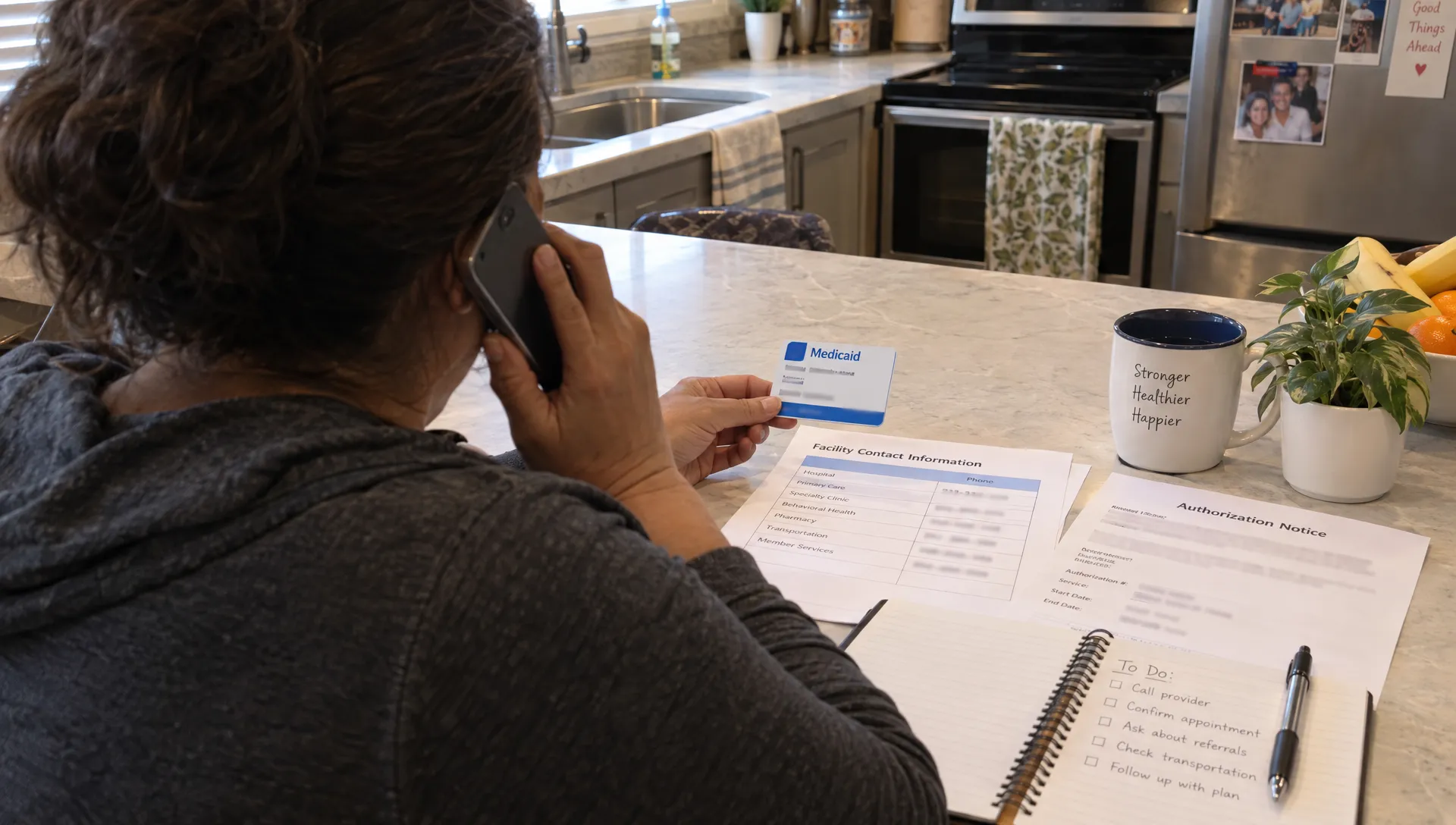
Have your Medicaid card and any separate health plan or behavioral health card ready. If you recently changed plans, ask which organization will handle services on your proposed admission date.
Collect the information that will help the plan identify the correct benefit:
- Your member ID, date of birth and current contact information
- The facility’s legal name, address and admissions phone number
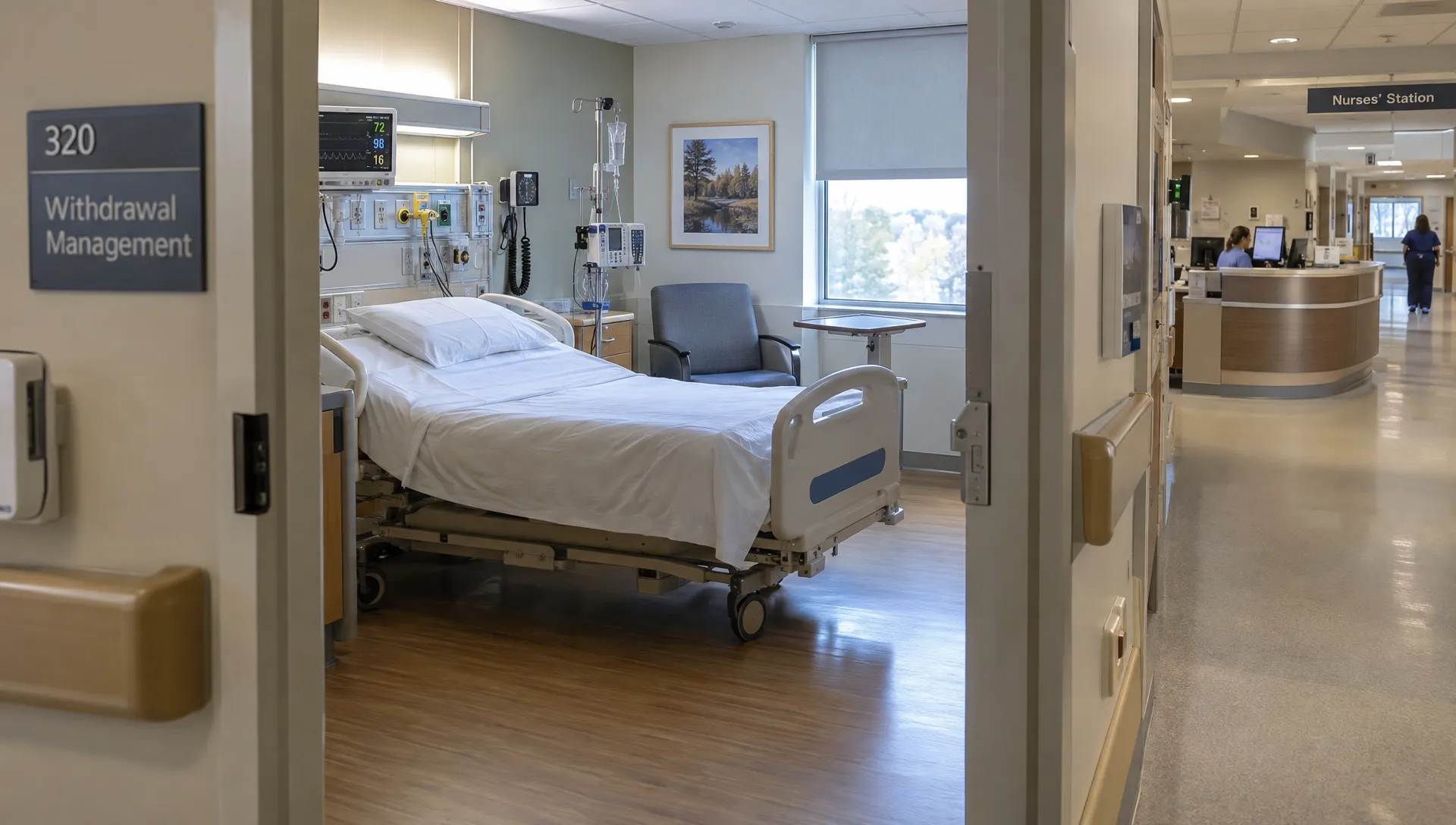
- The recommended service, such as outpatient treatment, residential care or withdrawal management
- Any referral, clinical assessment or proposed admission date
- The names of medications you need to continue
You do not need to diagnose yourself before calling. If no clinician has recommended a level of care, ask how to arrange a covered assessment. Explain any pregnancy, significant medical condition or urgent withdrawal concern so the intake team can route you appropriately.
Share sensitive information through the plan’s or provider’s verified communication channels, not an unsolicited message or unfamiliar referral website.
Step 2: Verify Medicaid drug treatment centers with your specific plan
Call the member services number on your insurance card. Ask whether behavioral health or substance use treatment is handled by that organization or another administrator.
Give the representative the facility’s exact address. If names are similar or the organization has multiple sites, ask admissions for its billing name and National Provider Identifier (NPI). The plan may also need other billing information to identify the correct provider.
A useful script is:
“Is this provider, at this address, participating in my specific plan for the treatment I need? Is there a separate behavioral health network or administrator I should contact?”
Then call the facility and ask its billing team to confirm the same details. Specifically ask whether it accepts your plan for new admissions, not merely whether it accepts Medicaid generally.
If the two answers conflict, request a three-way call or ask the plan to contact provider relations. Save the directory listing, but do not treat it as final proof. For fee-for-service coverage, confirm the provider’s Medicaid enrollment and any applicable service approval requirements instead of assuming managed care network rules apply.
Step 3: Check the exact treatment and medications
Coverage at Medicaid drug treatment centers is service-specific. Ask about the recommended level of care rather than requesting a general answer about “rehab.”
Outpatient counseling, intensive outpatient programs, residential treatment and medically managed withdrawal are different services. Approval for one does not automatically include the others. Room and board may also be treated differently from clinical services, depending on the program and coverage arrangement.
Ask the facility to explain what its proposed admission includes: clinical visits, medication management, laboratory testing and any services provided by outside clinicians. Have the plan verify coverage for those components.
If you take or need medication for opioid use disorder, ask directly about access to methadone, buprenorphine or naltrexone, as clinically appropriate. Medication visits, administration and pharmacy prescriptions may involve different billing arrangements. Confirm that treatment can continue during admission and after discharge, without assuming every facility offers every medication.
A clinical evaluation helps determine appropriate care, but it is not an insurance authorization. Our explanation of how assessments guide substance use disorder treatment describes how recommendations are developed and why treatment intensity should match clinical needs.
Step 4: Confirm authorization before the planned admission
Ask the plan whether a referral, prior authorization or other review is required. If authorization is necessary, find out whether the facility submits the request and what clinical information it needs.
For Medicaid drug treatment centers requiring approval, distinguish submitted, pending and approved. An admissions date or completed intake does not necessarily mean the plan has approved payment.
Request confirmation of the approved provider, location, service, dates and any limits on visits, units or days. Ask who will request additional time if treatment remains medically necessary and when that review must occur.
Authorization is not an unconditional payment guarantee. Eligibility, correct billing and other coverage requirements can still matter. Nevertheless, having the approval details helps identify a mismatch before a planned admission.
Do not delay emergency care while trying to complete routine verification. Suspected overdose, breathing problems, seizures or other life-threatening symptoms require emergency help through 911.
Step 5: Ask about costs before signing financial forms
Do not assume a quoted “program fee” is either covered or legally chargeable to you. Medicaid billing protections and permitted cost sharing depend on the service, provider arrangement and applicable rules.
When reviewing costs at Medicaid drug treatment centers, ask for a written explanation of any amount you would personally owe. Have the plan confirm whether that charge is permitted before agreeing to it.
Clarify whether the estimate includes assessments, medications, laboratory work, outside medical appointments and discharge services. Ask whether optional amenities or personal expenses are separate from treatment charges.
Be cautious about signing a broad self-pay agreement while coverage is still being checked. If someone says Medicaid will not pay, request the specific reason and verify it with your plan. Do not assume you can pay privately now and obtain reimbursement later.
Legal or employment documentation can involve separate payment questions. Our guide to insurance coverage for alcohol screening services explains why a clinical service and an administrative evaluation may be treated differently.
Step 6: Keep a verification record
Record each call’s date, the representative’s name and the reference number. Save relevant portal messages, benefit explanations, authorization notices and written estimates in one place.
For each facility, your record should answer four practical questions: who confirmed participation, what services were verified, what approval is still needed and whether an admission slot is available.
Written verification from Medicaid drug treatment centers is useful, but the plan should also confirm the coverage information. Ask where you can view authorization status or obtain a written response through a secure member portal.
Recheck unresolved details if the admission date, treatment location or recommended service changes. A verification tied to one setting may not resolve coverage for a different program. Store these records securely because they may contain sensitive health information.
If no covered facility has an opening
Ask your plan for help locating a provider that is both participating and accepting patients for your required level of care. A directory list alone does not resolve an access problem.
If the suggested Medicaid drug treatment centers cannot admit you, document who you contacted and the earliest appointments offered. Ask about care coordination, network access assistance and whether an out-of-network arrangement can be considered. Do not assume such an arrangement is approved until the plan confirms it.
You can search SAMHSA’s FindTreatment.gov directory for treatment options, then verify participation and availability directly. SAMHSA’s National Helpline at 1-800-662-HELP (4357) also provides treatment referral information. These resources do not authorize insurance benefits.
If coverage is denied, request the written notice and follow its appeal instructions and deadlines. Ask whether an expedited review is available when waiting could seriously jeopardize your health.
For possible alcohol or benzodiazepine withdrawal, seek prompt medical guidance rather than attempting abrupt withdrawal alone. Insurance calls should not substitute for urgent clinical assessment.
Compare clinical fit, not just coverage
Once coverage is clearer, compare whether each program can meet your needs. Ask about state licensing, clinician credentials, treatment methods and support for co-occurring mental health conditions. Accreditation can be another quality indicator, but it does not prove Medicaid participation or guarantee that a program is appropriate for you.
Among Medicaid drug treatment centers with confirmed availability, consider practical access as well. Can the program accommodate a disability, provide language assistance or coordinate ongoing medical care? Is the treatment schedule workable with employment or caregiving?
Ask your plan about non-emergency medical transportation benefits, eligibility and booking procedures if travel is a barrier. Routine care across state lines should be checked separately rather than assumed covered.
Prepare for a residential stay
Before arrival, request the facility’s packing list and rules for medications, identification and personal belongings. Ask how prescriptions should be brought in and whether any items are prohibited.
If shared laundry is part of the setting, custom woven clothing labels are one optional way to identify garments. Check the facility’s rules before buying anything, and keep optional personal purchases separate from the clinical charges you are verifying with insurance.
Frequently asked questions
How long will Medicaid pay for rehab? There is no single nationwide duration for every person or program. Coverage depends on your benefits, the service, medical necessity and applicable authorization requirements. Ask about the initial approval period and the process for requesting continued treatment.
Do Medicaid drug treatment centers accept every Medicaid plan? No. A facility may participate in some plans but not yours, or accept a plan only for certain services or locations. Verify your exact plan and proposed treatment with both the facility and the payer.
Does Medicaid cover drug treatment in Florida, Texas or North Carolina? Each state administers its own program within federal requirements. Your eligibility group, enrolled plan and recommended service affect the answer. Ask your state program or member services team about the specific treatment rather than relying on another person’s coverage experience.
Will covered treatment automatically satisfy a court or DOT requirement? No. Insurance coverage, clinical appropriateness and acceptance by a court, licensing agency or DOT process are separate questions. Confirm the required evaluator qualifications, documentation and completion steps with the requesting authority.
Need a separate court, licensing or DOT evaluation?
Affordable Evaluations offers nationwide telehealth drug and alcohol evaluations for court, probation, driver’s license reinstatement and DOT SAP needs. If you need an evaluation alongside treatment, confirm the requesting agency’s requirements before booking.
Do not assume that Medicaid coverage for treatment also pays for a separate administrative evaluation. Ask about fees, payment options and the required report so you can arrange the appropriate service without confusing it with treatment authorization.