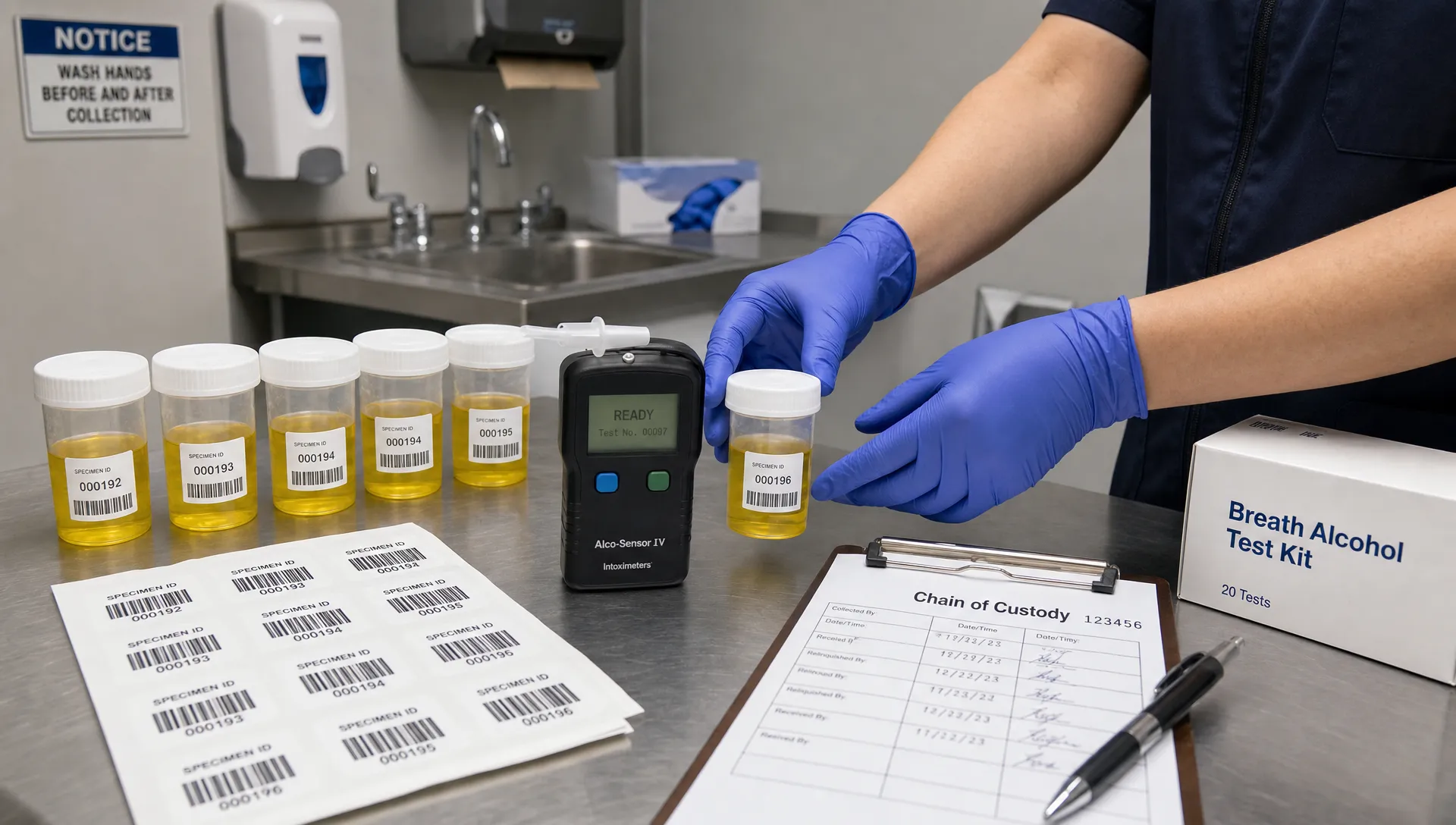

Drug and alcohol evaluations are most useful when they look beyond one incident or one lab result. A missed drug test, DUI arrest, workplace violation or probation requirement may be the reason someone schedules an assessment, but the evaluator still needs to understand the broader pattern: health, daily functioning, legal history, mental health, family support and current risk.
The Addiction Severity Index, often shortened to ASI, is one structured way to organize that information. It helps evaluators ask consistent questions across major life areas that can be affected by substance use. For clients, understanding the ASI can make the evaluation feel less mysterious and more focused on facts rather than judgment.
What is the Addiction Severity Index?
The Addiction Severity Index is a standardized, semi-structured interview used in many substance use assessment settings. It was developed to help clinicians and researchers measure the severity of substance-related problems across multiple areas of life, not just the amount or frequency of alcohol or drug use.
The original ASI was introduced in clinical research by A. Thomas McLellan and colleagues. The early validation work is available through PubMed’s record for the Addiction Severity Index, and later versions and adaptations have been used in treatment programs, research settings, correctional environments and community-based evaluations.
In practical terms, the ASI is an interview framework. The evaluator asks about substance use and related areas, then uses the answers to better understand the client’s needs, risks and strengths. Some providers use the full ASI. Others use adapted, shorter or ASI-informed tools as part of a broader evaluation.
Why evaluators use structured tools like the ASI
A good evaluation should be fair, consistent and clinically meaningful. Structured tools help reduce guesswork by making sure key topics are not skipped. They also create a clearer record of what was reviewed, which can matter when the evaluation is being used for court, probation, employment, licensing or a return-to-duty process.
The ASI is especially useful because substance use rarely exists in isolation. A person may report minimal current use but have serious legal stress. Another person may have no legal history but significant medical complications, unstable housing or untreated depression. A structured interview helps the evaluator see that difference.
If you are new to the overall process, Affordable Evaluations has a broader guide on what to expect in a substance abuse evaluation that explains appointment flow, identity verification, documentation and report use.
The main areas covered by the Addiction Severity Index
The ASI traditionally looks at seven major domains. Each domain gives the evaluator a different view of how substance use may be affecting the client’s life.
| ASI domain | What the evaluator may ask about | Why it matters |
|---|---|---|
| Medical status | Current health, chronic conditions, medications, hospitalizations | Medical issues can affect safety, treatment planning and relapse risk |
| Employment and support | Work history, income, financial stress, education, support needs | Stability can influence compliance and recovery planning |
| Alcohol use | Frequency, amount, intoxication patterns, consequences | Alcohol-related risk may require education, treatment or monitoring |
| Drug use | Use of prescription drugs, illicit drugs, cannabis or other substances | Patterns help distinguish isolated use from a substance use disorder risk |
| Legal status | Arrests, charges, probation, court requirements, pending cases | Legal obligations often shape report needs and timelines |
| Family and social relationships | Household environment, relationship stress, support systems | Recovery is affected by conflict, isolation and available support |
| Psychiatric status | Anxiety, depression, trauma symptoms, prior treatment, safety concerns | Mental health symptoms may require separate care or integrated support |
These areas do not automatically prove that someone has a substance use disorder. They give the evaluator a structured map of what is going well, what needs attention and what recommendations may be reasonable.
What happens during an ASI-informed interview?
An ASI-informed interview is usually direct and detailed. The evaluator may ask about current substance use, past use, treatment history, medical concerns, family history and legal involvement. Some questions can feel personal, but they are asked because the information may affect the final clinical opinion.
The evaluator may also review documents when relevant. These can include court orders, probation instructions, prior evaluation reports, treatment completion letters, driver’s license reinstatement requirements, employer instructions or DOT-related paperwork. The exact documents depend on the reason for the evaluation.
In a telehealth setting, the process is usually conducted through a secure video session. The evaluator verifies identity, reviews the referral reason, asks structured questions and explains next steps for the report. If a report is required, it should reflect the purpose of the evaluation and the information available at the time of the appointment.
For court-related cases, the ASI may be one part of the clinical picture. If you need more context on how legal reports are typically handled, this guide to court-ordered alcohol and drug evaluations explains common reasons courts request evaluations and what those assessments usually include.
What ASI scores can and cannot tell you
The ASI is often associated with composite scores, which are designed to estimate current problem severity in specific domains. These scores are commonly described on a scale from 0 to 1, with higher scores suggesting greater severity in that area. Older versions also included interviewer severity ratings.
Scores can help organize information, but they are not a simple pass or fail result. A high score in one domain does not always mean the same recommendation for every person. For example, a high legal severity score may reflect pending charges, probation pressure or multiple prior arrests. It does not necessarily mean the person has the same treatment needs as someone with severe daily alcohol or drug use.
A responsible evaluator interprets ASI findings alongside the interview, records, referral question, risk factors, protective factors and any applicable legal or workplace standards. The tool supports professional judgment. It does not replace it.

How the Addiction Severity Index fits different evaluation types
The ASI can be useful in many assessment contexts, but the purpose of the evaluation determines how the information is used.
For a court or probation evaluation, the evaluator may use ASI domains to understand whether the incident appears isolated, whether there is a broader pattern of substance-related consequences and whether education, counseling or treatment may be appropriate. The report may need to answer specific questions from the court or supervising agency.
For a DUI or driver’s license reinstatement evaluation, the evaluator may focus closely on alcohol and drug history, prior impaired driving incidents, treatment history and current risk reduction steps. Legal and state-specific requirements can shape the final report.
For a workplace or return-to-duty matter, the evaluator may consider job readiness, recovery stability, compliance history and whether ongoing support is needed. In federally regulated DOT cases, the Substance Abuse Professional process must follow specific federal requirements under 49 CFR Part 40 Subpart O. The ASI may inform clinical understanding, but it does not replace the DOT SAP process.
For a personal or voluntary evaluation, the ASI can help identify areas where early support may prevent future problems. A person may not need intensive treatment, but may benefit from counseling, education, monitoring or support for stress, relationships or mental health.
Why mental health questions are part of substance use evaluations
Some clients are surprised when an evaluator asks about anxiety, depression, trauma, sleep, anger, grief or psychiatric treatment. Those questions are not off-topic. Mental health symptoms can affect substance use patterns, relapse risk and the type of support that is most likely to help.
The National Institute on Drug Abuse notes in its principles of effective treatment that treatment should address the needs of the whole person, including medical, psychological, social, vocational and legal problems. That same whole-person principle applies to evaluations.
This is one reason some cases benefit from looking at both substance use and mental health together. Affordable Evaluations explains that overlap in more detail in its article on combining substance abuse and mental health evaluations.
How to prepare for an evaluation that may use the ASI
Preparation does not mean rehearsing answers. It means gathering accurate information and being ready to discuss your history honestly. Evaluators are trained to work with sensitive topics, and incomplete answers can make the final report less useful.
Helpful preparation may include:
- Reviewing the reason the evaluation was requested
- Gathering court, probation, employer, licensing or DOT documents
- Listing current medications and major medical conditions
- Writing down prior counseling, treatment or education programs
- Being clear about dates of substance use, testing, arrests or violations
- Preparing questions about report delivery, next steps and confidentiality
Honesty is especially important. Minimizing use, guessing dates or leaving out prior incidents can create inconsistencies if records say something different. Clear information gives the evaluator a better chance to make recommendations that fit the actual situation.
Common misunderstandings about the ASI
One common misunderstanding is that the Addiction Severity Index is a diagnosis by itself. It is not. A diagnosis, when clinically appropriate, requires professional assessment and may involve criteria from the DSM, clinical history, records and current functioning.
Another misunderstanding is that the ASI only looks for problems. In reality, it also helps identify strengths. Stable employment, supportive relationships, medical care, treatment completion, negative drug tests and insight into past behavior can all matter.
A third misunderstanding is that every drug and alcohol evaluation uses the ASI in the same way. Evaluation tools vary by provider, state, referral source and case type. Some evaluators use the full ASI. Some use shorter validated screeners, clinical interviews or agency-specific forms. The important point is that the evaluation should be structured enough to support a fair and defensible conclusion.
Frequently Asked Questions
Is the Addiction Severity Index a test I can pass or fail? No. The Addiction Severity Index is an assessment tool, not a pass or fail exam. It helps the evaluator understand severity across life areas and make appropriate recommendations.
Does a high ASI score mean I need treatment? Not automatically. A higher score may show greater concern in one area, but recommendations depend on the full interview, records, referral requirements, risk factors and clinical judgment.
Can the ASI be used in an online drug and alcohol evaluation? Yes, ASI-informed questions can be asked during a secure telehealth evaluation. The evaluator can still review history, documents and current needs through a HIPAA-compliant video session.
Is the ASI the same as a DOT SAP evaluation? No. DOT SAP evaluations must follow federal DOT rules. The ASI may help organize clinical information, but it does not replace the required SAP process.
Will my evaluation report include ASI scores? It depends on the provider, referral source and type of report required. Some reports summarize findings and recommendations without listing specific ASI scores.
Need a clear, timely evaluation?
If you need a drug and alcohol evaluation for court, probation, driver’s license reinstatement or DOT SAP compliance, Affordable Evaluations offers nationwide telehealth appointments with licensed, certified evaluators. Same-day rush appointments, secure video sessions, flexible payment plans and fast PDF report delivery are available for many cases.
You can start by visiting Affordable Evaluations to request an appointment and get guidance on the documents needed for your specific evaluation.