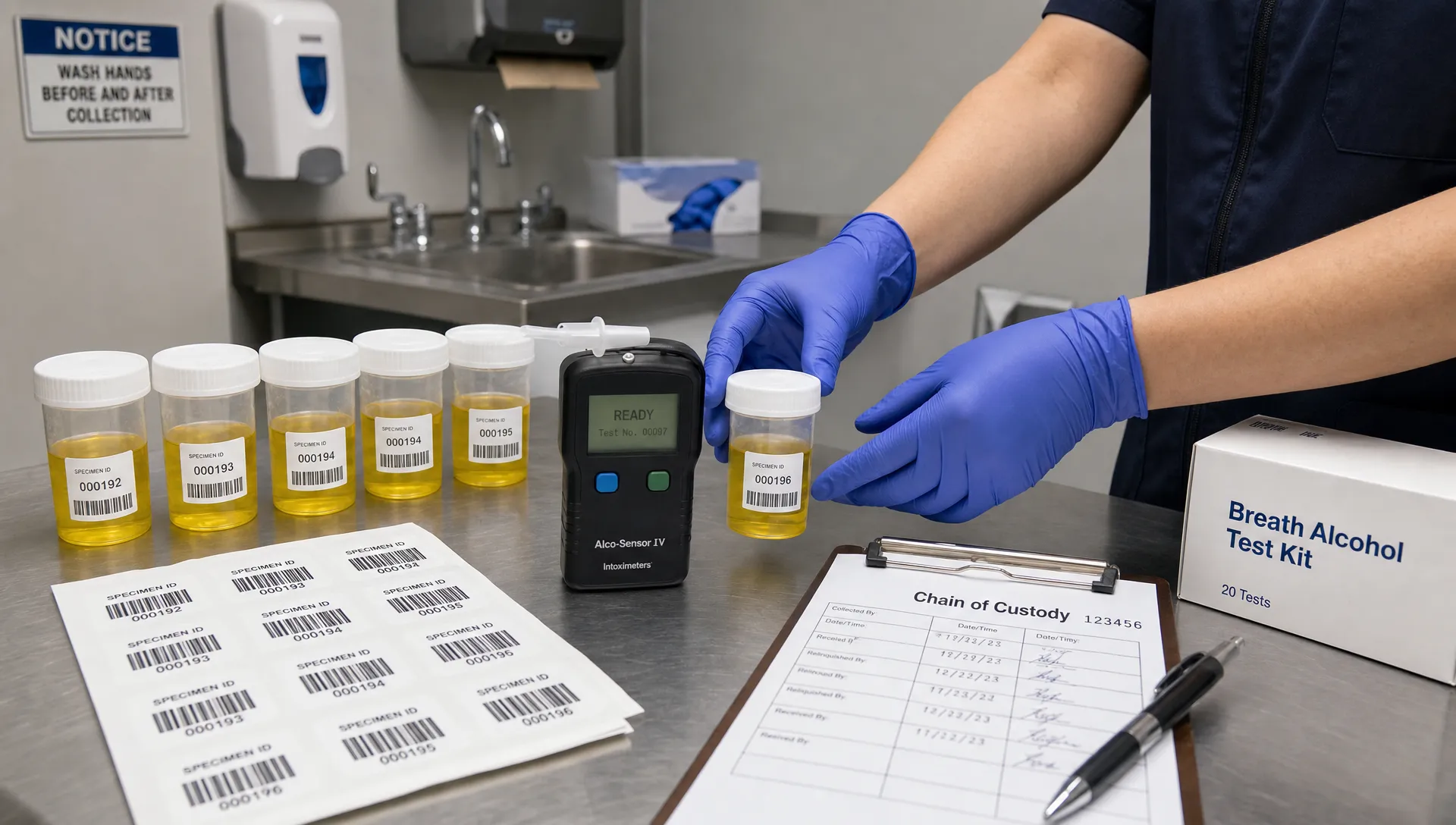
Before you book a dot qualified sap, verify more than availability and price. In DOT return-to-duty cases, the evaluator’s credentials, training, DOT rule knowledge and ability to document the process affect whether your employer, court or licensing authority can rely on the report.
A rushed choice can cost you time. If the person you book is not properly qualified for DOT work, you may have to repeat the evaluation, restart parts of the process or explain gaps to an employer that is responsible for compliance. The goal is not to interrogate a provider. It is to confirm, before you pay and schedule, that the SAP can legally perform the role your case requires.
Start by confirming what type of case you have
Not every drug or alcohol evaluation is a DOT SAP case. A DUI assessment for court, a probation evaluation and a workplace assessment may involve similar clinical topics, but DOT return-to-duty rules have their own procedures.
If you hold a CDL or CLP and had a DOT drug or alcohol violation, your case is often tied to the FMCSA Drug and Alcohol Clearinghouse. Aviation, railroad, transit, pipeline and maritime cases may fall under different DOT agency rules. Before booking, identify the agency connected to your violation and the party that needs the report, such as your employer, consortium, court, probation officer or licensing authority.
This first step helps you ask the right questions. A counselor may be excellent at clinical assessments yet still not be qualified to complete a DOT SAP process.
What “dot qualified sap” means under 49 CFR Part 40
DOT uses the term Substance Abuse Professional, or SAP, for the person who evaluates an employee after a DOT drug or alcohol testing violation and makes recommendations for education, treatment, follow-up evaluation and follow-up testing. The qualification rules are found in 49 CFR Part 40.281.
A provider does not become qualified simply by calling themselves a SAP. DOT rules require an acceptable professional credential, basic knowledge of substance use disorders, SAP qualification training, successful completion of an exam and ongoing continuing education. That is why the phrase “DOT-certified SAP” can be misleading. DOT sets the requirements, but it does not issue one universal DOT certificate that replaces those requirements.
A dot qualified sap should be able to explain the credential they hold, the SAP training they completed and how they keep current with DOT rules. They should also understand the difference between a clinical recommendation and the DOT compliance steps needed before a covered employee can return to safety-sensitive work.
Use this verification checklist before you schedule
The easiest way to verify a provider is to ask direct, practical questions and look for clear answers. You do not need to understand every regulation, but you should be able to confirm the essentials before sending payment or selecting the SAP in the Clearinghouse.
When verifying a dot qualified sap, document who you spoke with, the date, the answers given and any written confirmation you receive. That record can help if your employer, third-party administrator or attorney later asks how you selected the provider.
| Verification item | What to ask | Why it matters |
|---|---|---|
| Professional credential | What license or certification qualifies you to serve as a DOT SAP? | DOT requires a recognized professional credential before SAP training counts. |
| SAP qualification training | When did you complete DOT SAP qualification training and the exam? | A general counseling license alone is not enough for DOT SAP work. |
| Continuing education | How do you maintain the required SAP continuing education? | DOT requires ongoing professional development for SAP functions. |
| DOT agency experience | Do you handle FMCSA, FAA, FRA, FTA, PHMSA or USCG cases? | Agency-specific rules can affect reports and timelines. |
| FMCSA Clearinghouse access | If my case is FMCSA, can I designate you in the Clearinghouse? | CDL and CLP violations usually require Clearinghouse steps. |
| Report process | Who receives the initial and follow-up reports, and how fast are they sent? | Reports must reach the right compliance contact at the right time. |
| Independence | Are your recommendations based on your own clinical evaluation? | SAP decisions must be independent and safety focused. |
Verify the professional credential
Under DOT rules, eligible SAP credentials include certain licensed or certified health and behavioral health professions, as well as specific alcohol and drug counselor certifications. The exact credential matters.
Ask for the provider’s professional license or certification type, the issuing state or organization and whether it is active. In many cases, you can check a state licensing board or credentialing body online. If the provider is an addiction counselor, ask which certification body issued the credential. If they are a physician, psychologist, social worker, marriage and family therapist or employee assistance professional, ask for the license or certification details that support their SAP eligibility.
A legitimate provider should not be offended by basic credential questions. Employers and service agents also have compliance duties, so transparent documentation is part of the process.
Confirm SAP training, exam and continuing education
A valid clinical license does not automatically make someone a SAP. DOT rules require SAP qualification training that covers Part 40, DOT agency regulations, the SAP role, the return-to-duty process, follow-up testing plans and related safety issues.
A dot qualified sap should also have passed a SAP exam after training and completed continuing education. The DOT standard requires at least 12 professional development hours related to SAP functions during each 3-year period after the exam. You do not need to request a provider’s full personnel file, but you can ask when they completed training, how they track continuing education and whether documentation is available to employers or DOT representatives when required.
Be cautious if the answer is vague, such as “I have been a counselor for years” without any reference to SAP training or DOT rules.
For FMCSA cases, confirm Clearinghouse capability
If you are a CDL or CLP driver with an FMCSA-covered violation, the FMCSA Drug and Alcohol Clearinghouse is central to the process. You generally must designate your SAP in the Clearinghouse so the SAP can enter required milestones, including the initial assessment and eligibility for a return-to-duty test.
For FMCSA drivers, a dot qualified sap should know how the Clearinghouse workflow fits with the clinical evaluation. If a provider says they can handle CDL return-to-duty work but cannot be found or designated in the Clearinghouse, pause and ask for clarification before booking.

Ask these questions before you pay
You can often verify a provider in one phone call or secure message. The best answers are specific, calm and process oriented. If the provider or scheduling team cannot answer immediately, they should be willing to confirm details before your appointment.
When you are comparing a dot qualified sap with another evaluator, use the same questions for each provider. Consistency makes it easier to spot vague claims or missing steps.
| Question | A clear answer should cover |
|---|---|
| Which DOT agencies do you serve? | The provider should name the agencies they handle and identify limits if any apply. |
| What credential qualifies you under Part 40? | They should state the license or certification type, not just say they are experienced. |
| Have you completed SAP qualification training and the required exam? | They should confirm SAP-specific training and exam completion. |
| How do you handle FMCSA Clearinghouse cases? | They should explain driver designation, SAP acceptance and milestone reporting. |
| What happens if education or treatment is required? | They should explain that the initial evaluation may lead to recommendations before the follow-up evaluation. |
| When is the report sent? | They should explain the report path, delivery method and realistic timing. |
| Is the appointment conducted by secure video if online? | They should describe identity verification, privacy and how documents are exchanged. |
For more detail on the evaluation appointment itself, including documents and typical questions, review this guide to the initial DOT SAP interview.
Red flags that should make you pause
Some red flags are obvious. A provider who guarantees that you will be cleared, offers a report without a real evaluation or says education and treatment are never required is not describing a compliant DOT process. The SAP must make an individualized recommendation based on the evaluation, then complete a follow-up evaluation before determining whether you have successfully complied.
Other warning signs are more subtle. Be careful if someone says they are a dot qualified sap but cannot identify their qualifying credential, cannot explain SAP training or confuses a court DUI assessment with DOT return-to-duty requirements. A court may accept one type of report, but your employer may need a DOT-specific SAP report and follow-up testing plan.
Also pause if an online provider has no secure document process, no clear privacy practices or no explanation of how identity is verified for video sessions. Online SAP evaluations can be appropriate, but the format does not remove the DOT requirements. For a broader compliance check, see this article on confirming a DOT-compliant online SAP evaluation.
Do not choose on price alone
Cost matters, especially when you are already dealing with lost work time, court obligations or license issues. Still, the cheapest appointment can become expensive if it is not accepted or if the SAP cannot complete the necessary reporting.
A better comparison is total value. Look at qualification, scheduling speed, report delivery, responsiveness and whether the provider understands your specific DOT agency. If your case also involves court, probation or license reinstatement, ask whether the evaluator can help you avoid duplicate evaluations when requirements overlap. The DOT process has priority for DOT violations, but coordination can reduce confusion.
Independence also matters. A SAP is not your advocate, your employer’s advocate or a shortcut around safety rules. The role is to make a professional recommendation under DOT standards. If you want to understand why that independence protects the integrity of the process, this article explains the value of an independent SAP provider.
What to expect after you verify and book
Once you are comfortable with the provider’s qualifications, confirm the appointment details in writing. You should know the date and time, whether the session is by secure video, what documents to upload, how payment works and who will receive the report.
For a DOT return-to-duty case, the SAP process usually includes an initial evaluation, a recommendation for education or treatment, proof of completion, a follow-up evaluation and a determination about eligibility for the return-to-duty test. The SAP also provides a follow-up testing plan to the employer, but the employer manages testing.
Booking a dot qualified sap does not mean instant clearance. It means you are starting the correct process with someone who is allowed to guide the DOT SAP steps. That distinction can save you from delays and protect your ability to return to safety-sensitive work when the requirements are complete.
Frequently Asked Questions
Does DOT certify SAPs? DOT sets qualification requirements in 49 CFR Part 40, but it does not issue one universal DOT certification that automatically proves a provider is qualified. You should verify the provider’s professional credential, SAP training, exam completion and continuing education.
Can an online SAP evaluation be valid? Yes, an online SAP evaluation can be valid when it follows DOT requirements, uses secure procedures and allows the SAP to complete a proper clinical evaluation. The provider still must be qualified and able to complete any required reporting.
What if my employer rejects the SAP I chose? Ask the employer or third-party administrator why the SAP was rejected. Employers have compliance responsibilities and may request documentation from a SAP they are using or considering. If there is a qualification issue, you may need to select another provider.
Is a court evaluator the same as a DOT SAP? Not always. A court evaluator may be licensed to complete DUI or probation assessments, but DOT SAP work requires additional qualification steps under Part 40. If your case involves both court and DOT requirements, confirm both needs before booking.
How fast can I return to work after choosing a SAP? Timing depends on appointment availability, the SAP recommendation, how quickly you complete education or treatment and employer testing steps. A dot qualified sap can move the process correctly, but they cannot skip required steps or guarantee same-day clearance.
Book with confidence
If you need a DOT SAP evaluation, court report, probation assessment or driver’s license reinstatement evaluation, Affordable Evaluations provides nationwide telehealth support with licensed, certified evaluators, secure video sessions, rush appointment options and fast PDF report delivery.
Start by verifying the provider, then schedule with a team that understands compliance and clear communication. You can begin through Affordable Evaluations and ask the questions that matter before you book.