
A substance abuse assessment for drivers license reinstatement may be needed after a DUI or DWI, an alcohol- or drug-related revocation or a licensing agency’s review of your fitness to drive. The requirement depends on your state, your driving history and the instructions in your case. An arrest alone does not create the same assessment requirement everywhere.
The safest starting point is your official suspension, revocation or reinstatement notice. Check whether it requires an assessment, an education course, treatment or more than one of these. Completing something for court does not automatically satisfy the DMV, and finishing an assessment does not by itself restore your driving privileges.
When is a substance abuse assessment for drivers license required?
An assessment is generally needed when a court, probation department or driver licensing agency specifically requires a professional evaluation of your alcohol or drug use. States may call it a substance use evaluation, alcohol assessment, chemical dependency evaluation or another name.
Common situations include:
| Situation | What to verify |
|---|---|
| DUI or DWI case | Whether the court, licensing agency or both require an assessment |
| Alcohol- or drug-related suspension or revocation | Whether an evaluation is part of the reinstatement application |
| Repeat impaired-driving offenses | Whether additional evaluation, treatment documentation or a hearing is required |
| Licensing review involving substance use concerns | Which medical or clinical reports the agency requests |
Do not assume that every suspension requires this service. A suspension for unpaid tickets, for example, may involve entirely different reinstatement steps unless another requirement applies to your case.
Before arranging a substance abuse assessment for drivers license purposes, identify the agency requesting it and the exact form or report it expects. If the notice only requires a class or a drug test, ask whether an assessment is also necessary rather than buying an unrelated service.
Court requirements and DMV requirements can be different
A DUI can create two separate tracks: a criminal court case and an administrative licensing case. These tracks may have different deadlines, approved providers and completion requirements.
For example, a court may require an evaluation for sentencing or probation, while the licensing agency requires a state-specific report before considering reinstatement. One assessment might satisfy both, but only if both recipients accept the evaluator, report format and timing.
Ask each authority whether the same evaluation can be used. Get the answer in writing when possible, especially if you are trying to avoid paying for duplicate appointments.
Commercial drivers should also distinguish state licensing requirements from federal return-to-duty obligations. A DUI-related evaluation does not automatically replace a DOT Substance Abuse Professional evaluation. Understanding the difference between DUI court evaluations and the DOT SAP process can help you identify which process applies.
State rules determine which assessment counts
There is no single nationwide report that every driver licensing agency must accept. A substance abuse assessment for drivers license reinstatement must meet the rules of the authority reviewing your case, even when the appointment takes place online.
Two examples illustrate why checking your state matters:
- North Carolina: DWI-related restoration can involve a substance use assessment and completion of required education or treatment. Confirm current requirements through the North Carolina Division of Motor Vehicles and verify that the provider can satisfy North Carolina’s DWI requirements.
- Michigan: Certain alcohol- or drug-related revocations involve a license restoration appeal, with a substance use evaluation and other supporting evidence. The Michigan Department of State provides the applicable restoration instructions and forms.
These examples are not interchangeable checklists. Your offense history, type of licensing action and current eligibility can change what you must submit.
Also check whether the agency limits how old an evaluation may be when it receives your application. An assessment completed too early can become outdated before a hearing or filing date.
What the assessment involves
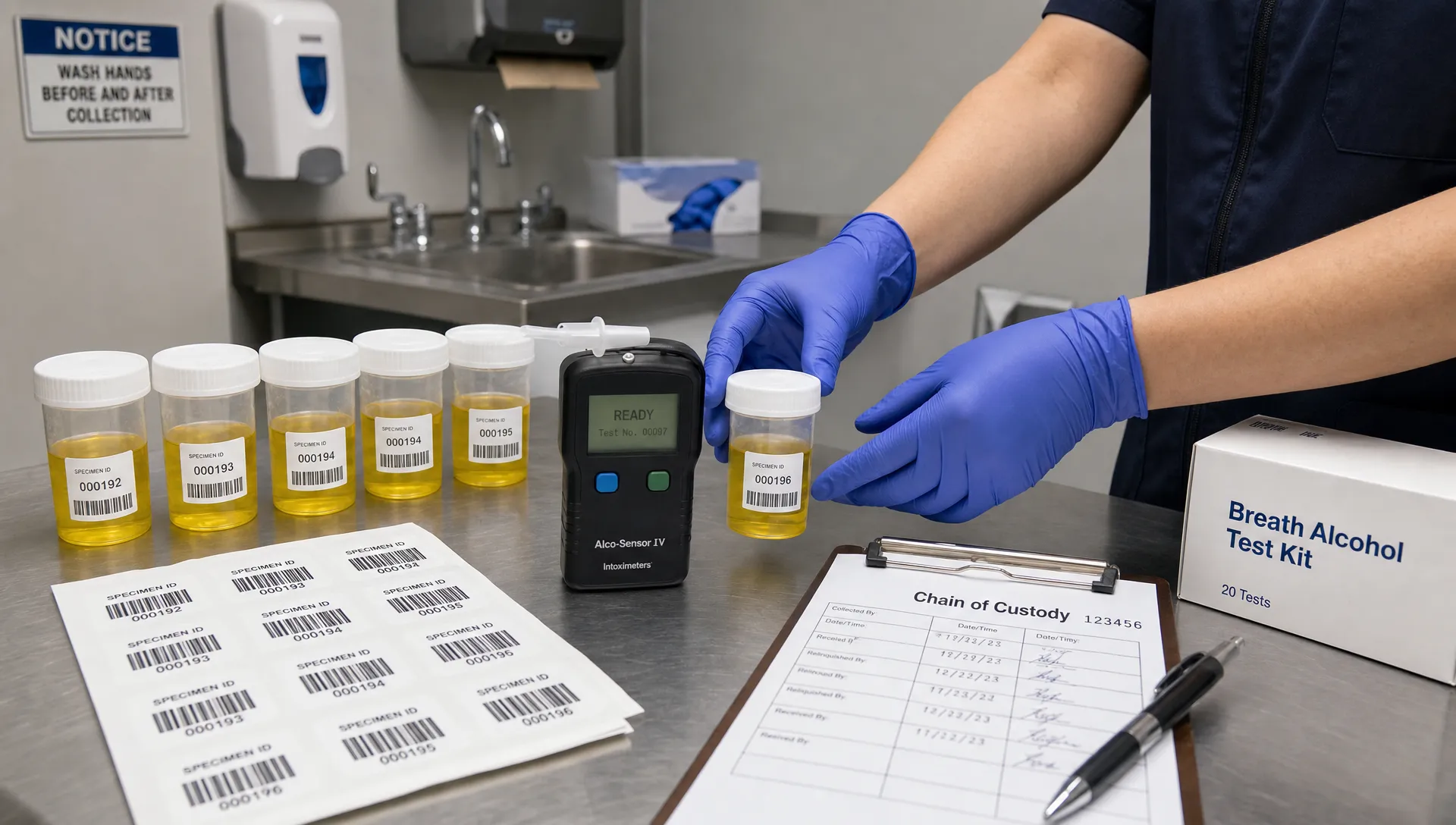
The evaluation is a clinical review, not simply a drug test. It commonly includes an interview, standardized screening tools and a review of relevant records.
The evaluator may ask about alcohol and drug use, the circumstances of the driving incident, prior offenses, previous treatment, medications and how substance use has affected daily life. Mental health symptoms may also be discussed when clinically relevant.
A substance abuse assessment for drivers license purposes may lead to recommendations for education, counseling, treatment or further evaluation. Depending on the findings and the applicable rules, the evaluator may conclude that no additional clinical services are indicated. The licensing agency can still impose separate legal or administrative conditions.
An assessment is not a guarantee of a diagnosis, a particular recommendation or license reinstatement. Recommendations should follow the evidence, not the outcome you hope to receive.
Laboratory testing is sometimes required separately. A negative drug or alcohol test does not replace a requested clinical evaluation. For a fuller explanation of the appointment itself, review what to expect in a substance abuse evaluation.
When education or treatment must come next
Completing the interview may be only the first step. Depending on your findings and state requirements, you may need to finish an approved education program, outpatient counseling or another level of care before the agency will move forward.
Ask whether a recommendation is a clinical recommendation, a mandatory licensing condition or both. That distinction helps you understand who determines completion and which documents will prove it.
After a substance abuse assessment for drivers license reinstatement, keep the written recommendations and ask where any required services must be completed. A general counseling session may not count as an approved impaired-driving program.
If you believe the report contains a factual error, ask the evaluator about the correction process. Disagreeing with a recommendation is different from correcting an incorrect incident date or medication entry. Do not alter the report yourself.
Verify the evaluator before paying
A professional license alone does not establish that an evaluator is approved for every state’s reinstatement process. Likewise, a provider offering nationwide telehealth does not mean every licensing agency accepts every remote assessment.
Before scheduling, verify these points:
- Provider eligibility: Does the agency require a particular credential, certification or listing in an approved-provider directory?
- Appointment format: Is telehealth accepted for this assessment and your location during the appointment?
- Required paperwork: Can the evaluator complete the current state form and review the necessary records?
- Timing and delivery: When will the completed report be available, and who must submit it?
- Total cost: What is included, and are form completion, additional copies, revisions or rush processing separate charges?
When booking a substance abuse assessment for drivers license requirements, give the provider your actual notice or checklist before paying. Describing the appointment only as “a DUI evaluation” may leave out an important state-specific requirement.
If the provider’s answer conflicts with your agency’s instructions, resolve the discrepancy first. A fast appointment has little value if the resulting report is not accepted.
Documents to gather before the appointment
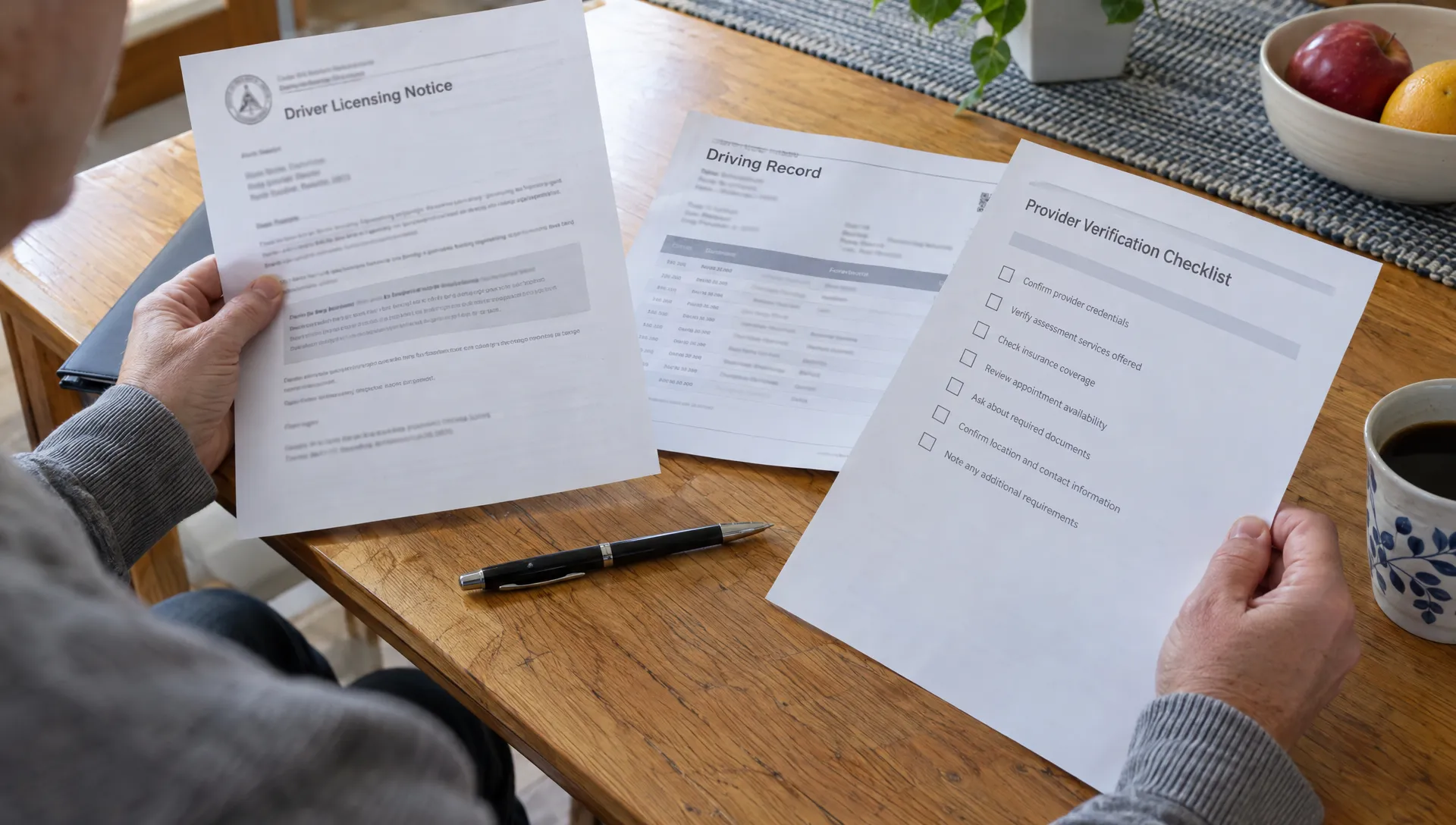
Ask the evaluator for a case-specific document list. Commonly requested records include photo identification, the licensing notice, a current driving record, court paperwork and records of previous assessments or treatment. Incident reports, medication information or test results may also be relevant.
If you have more than one impaired-driving incident, prepare an accurate timeline. Include dates, jurisdictions and the education or treatment completed after each incident. Tell the evaluator when a record is missing rather than guessing at its contents.
Preparation is about completeness, not rehearsing answers. Report your substance use and history honestly, including information you think may be unfavorable. Inconsistencies between your interview and official records can require clarification and delay the report.
Do not stop prescribed medication or change treatment to influence an evaluation. Discuss medication questions with your prescriber and disclose relevant information to the evaluator.
Understand privacy and report sharing
A substance abuse assessment for drivers license reinstatement can involve sharing sensitive health information with an outside authority. Before the interview, ask what information will be collected, what the report will contain and who will receive it.
Privacy protections can depend on the provider, the records involved and applicable law. Ask the provider to explain any authorization or release form, including its recipients, purpose and duration. Also ask what disclosures may occur because of a court order or another legal obligation.
A secure telehealth appointment does not mean the resulting report stays solely between you and the clinician. The purpose of the evaluation may be to provide findings to a licensing agency, court or probation officer.
Request your own copy when available and use the submission method the recipient specifies. Avoid sending sensitive documents to an unverified email address or assuming that an ordinary email attachment is the required delivery method.
Out-of-state cases require an extra acceptance check
Moving does not automatically resolve an outstanding licensing action in another state. The state that imposed the suspension or revocation may still require specific documentation before clearing the matter.
Before obtaining a substance abuse assessment for drivers license reinstatement from an out-of-state provider, confirm acceptance with the agency handling the original action. Ask whether it accepts the provider’s credentials, remote appointment format and proposed report.
Your current state may also have its own licensing requirements. Separately, the clinician must be authorized to provide the service where you are physically located during the appointment. Tell the provider your location rather than assuming that a video visit removes state boundaries.
Keep copies of written acceptance guidance, completed forms and delivery confirmations. If a required form has changed, check which version the agency will accept before the evaluator finalizes it.
What to do after the report is complete
Review the report for factual accuracy, then follow the official submission instructions. Some agencies require the evaluator to send it directly; others require you to include it in an application packet.
Keep proof of any required education or treatment completion alongside the report. Depending on your case, reinstatement may also involve fees, insurance filings, an ignition interlock requirement or a hearing.
A submitted report is not permission to drive. Confirm with the licensing agency that your driving privilege has been restored and understand any restrictions before getting behind the wheel. Report delivery, agency review and actual reinstatement are separate milestones.
Frequently asked questions
How do I pass a substance abuse assessment? There is no universal pass-or-fail answer sheet. Give accurate information, provide the requested records and participate honestly. The evaluator’s role is to assess your circumstances and recommend appropriate next steps, not guarantee reinstatement.
Can I complete the assessment online? Possibly. A substance abuse assessment for drivers license reinstatement may be completed through telehealth when the receiving authority accepts that format and the provider is authorized to serve you. Verify both before scheduling.
How much does an assessment cost? Fees vary by provider, state requirements and the work involved. Request a written total and clarify whether it includes required forms and report delivery. Education, treatment, testing and licensing fees may be separate expenses.
Will a court-ordered assessment automatically satisfy the DMV? No. The licensing agency may require a different provider qualification, form or submission process. Ask both authorities whether one report can meet their requirements before arranging duplicate evaluations.
Confirm your requirements before scheduling
Affordable Evaluations offers nationwide telehealth alcohol and drug evaluations, secure video appointments and fast PDF report delivery, with same-day rush appointments available. Acceptance still depends on the requirements of your particular case.
If you need a substance abuse assessment for drivers license reinstatement, start by sharing your official notice, state forms and deadline. Explore Affordable Evaluations’ driver’s license reinstatement evaluation services and confirm that the service fits your agency’s requirements before booking.